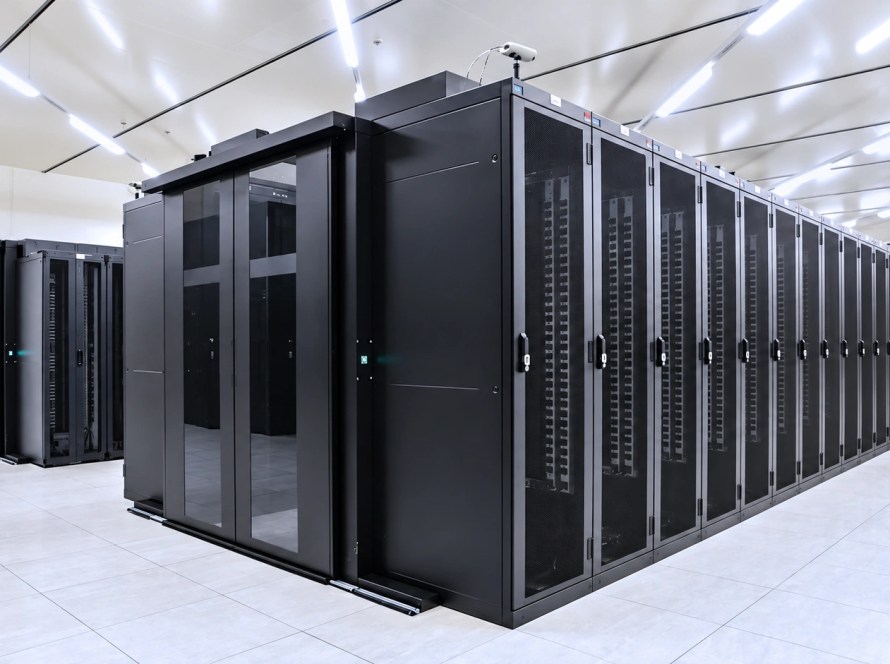
E-waste is the fastest-growing waste stream in the world, and the AI-driven hardware boom is adding to it. But the data center industry occupies an unusual and often misunderstood position in that story. Enterprise IT hardware, unlike the consumer electronics that dominate the e-waste crisis, is exactly the category that gets recovered well, when it is handled by professionals. This is a plain-numbers reference on e-waste and data centers in 2026: how big the problem is, how much value is at stake, where data centers actually fit, and why enterprise IT recovery is part of the solution rather than the problem.
TL;DR
E-waste is a large and growing global challenge, and enterprise IT sits on the recoverable end of it. The essentials:
- The world generated 62 million tonnes of e-waste in 2022. That is up 82% from 34 million tonnes in 2010, and it is projected to reach 82 million tonnes by 2030, according to the UN’s Global E-waste Monitor.
- Only 22.3% is formally recycled. Less than a quarter of global e-waste is documented as properly collected and recycled, and e-waste generation is rising five times faster than formal recycling.
- The lost value is enormous. The raw materials in 2022’s e-waste were valued at about $91 billion, of which only around $19 billion was recovered through sound recycling, leaving roughly $62 billion in recoverable resources unaccounted for.
- Data centers are a small but high-value slice. Data center hardware is a modest share of total e-waste tonnage, but it is unusually dense in recoverable value: servers, networking gear, and AI accelerators carry high-grade materials and, often, significant residual resale value.
- Enterprise IT recycles far better than the average, when handled right. Unlike scattered consumer devices, data center hardware is retired in bulk, tracked, and processed through professional ITAD channels, which is precisely how recovery rates rise well above the 22.3% global figure.
The point worth understanding: the global e-waste crisis is largely a consumer-electronics and informal-handling problem, small devices, scattered across billions of users, much of it never entering formal recycling. Enterprise data center hardware is the opposite: concentrated, tracked, and valuable enough that recovering it is both economically and environmentally the obvious choice. The data center industry, handled well, is on the solution side of the e-waste equation.
The Scale of the Global E-Waste Problem
To place data centers in context, start with the global picture, which is large and worsening.
The authoritative source is the UN’s Global E-waste Monitor, produced by the ITU and UNITAR. Its most recent edition establishes the benchmark figures the rest of this reference builds on:
| Metric | Figure | Source |
|---|---|---|
| Global e-waste generated, 2022 | 62 million tonnes | Global E-waste Monitor 2024 |
| Global e-waste generated, 2010 | 34 million tonnes | Global E-waste Monitor 2024 |
| Projected e-waste, 2030 | 82 million tonnes | Global E-waste Monitor 2024 |
| Formally collected and recycled, 2022 | 22.3% | Global E-waste Monitor 2024 |
| Raw-material value, 2022 e-waste | ~$91 billion | Global E-waste Monitor 2024 |
| Value recovered through sound recycling | ~$19 billion | Global E-waste Monitor 2024 |
| Rare-earth demand met by recycling | ~1% | Global E-waste Monitor 2024 |
A few figures anchor the problem. The world generated a record 62 million tonnes of e-waste in 2022, up 82% from 2010, and it is on track to reach 82 million tonnes by 2030. Yet only 22.3% of that mass was documented as formally collected and recycled, and the gap is widening: e-waste generation is rising roughly five times faster than documented formal recycling. To make the scale tangible, the UN noted that 2022’s e-waste would fill about 1.55 million 40-tonne trucks, roughly enough to form a bumper-to-bumper line encircling the Earth.
The most striking part is the squandered value. The raw materials embedded in 2022’s e-waste, the copper, gold, silver, palladium, and other metals, were valued at roughly $91 billion, but only about $19 billion was recovered through environmentally sound recycling. That leaves on the order of $62 billion in recoverable resources unaccounted for each year, dumped or handled informally. And recycling barely touches the rarest materials: only about 1% of global rare-earth element demand is currently met by e-waste recycling. The e-waste problem, in short, is not just an environmental hazard; it is an enormous, recurring economic loss.
Where Data Centers Actually Fit
Here is where the data center story diverges from the headline crisis, and where the common assumption gets it wrong.
A Small Share of Tonnage
By raw weight, data centers are a modest contributor to global e-waste. The e-waste crisis is dominated by consumer and small equipment: the Global E-waste Monitor found that small equipment (things like toasters, toys, and small consumer electronics) was the single largest category at over 20 million tonnes, and small IT and telecommunication equipment like mobile phones added another 5 million tonnes. These are devices owned by billions of people, replaced frequently, and scattered impossibly widely. That dispersion is the core of the recycling problem: it is extraordinarily hard to collect e-waste that exists as one phone or one toaster at a time across billions of households.
Data center hardware is a much smaller share of that total tonnage. Enterprise IT is a fraction of the device count and the mass that consumer electronics represent. So in pure weight terms, data centers are not the driver of the e-waste crisis.
A High Share of Recoverable Value
But tonnage is the wrong lens for data center hardware, because what data centers lack in weight they make up in value density. A retired server, a decommissioned switch, or an end-of-life AI accelerator carries far more recoverable value per kilogram than a consumer device: high-grade circuit boards, substantial copper, gold-bearing connectors and contacts, and, critically, often significant residual resale value in the working components. Where a consumer device may be worth recovering only for trace materials, enterprise hardware frequently retains meaningful market value as reusable equipment, on top of its materials value.
This is the crucial distinction. The global e-waste value problem, that $62 billion in unrecovered resources, is largely a function of low-value, hard-to-collect consumer devices going uncollected. Data center hardware is the opposite case: high-value, collected in bulk, and economically worth recovering in full. The economics that make consumer e-waste hard to recover profitably work entirely in favor of recovering enterprise IT.
Concentrated and Trackable
The other structural advantage is concentration. Consumer e-waste is scattered; data center hardware is concentrated. When a data center refreshes, it retires equipment in bulk, from a known location, with serial numbers and asset tags, under a documented decommissioning process. That concentration and traceability is exactly what makes high recovery rates achievable. There is no needle-in-a-haystack collection problem; there is a defined pallet of tracked, valuable, professionally-handled hardware. The conditions that doom consumer e-waste to low recovery rates are simply absent in the enterprise case.
Why Enterprise IT Recycles Better Than the Average
The 22.3% global recycling rate is an average dominated by hard-to-collect consumer waste. Enterprise IT hardware, handled through professional channels, performs far better, and understanding why explains where the data center industry sits in the e-waste story.
Bulk Retirement Through Professional Channels
Data center hardware does not disappear into household drawers or informal waste streams. It is retired in bulk and processed through IT asset disposition (ITAD) channels: professional processes designed specifically to recover value and ensure responsible handling. A certified ITAD process routes retired hardware through reuse first, then materials recovery, with none of it going to landfill. This is a fundamentally different pathway than the one most consumer e-waste follows, and it produces fundamentally different recovery rates.
Reuse Before Recycling
The single biggest environmental and economic lever in enterprise IT is reuse. A large share of retired data center hardware still works and retains market value, so the best outcome is not recycling at all but remarketing and redeployment, extending the useful life of the equipment. Reuse preserves far more of the embedded value and energy than even the best materials recycling, and it is standard practice in professional ITAD. Only hardware that is genuinely at end of life proceeds to materials recovery. This reuse-first hierarchy is why enterprise IT recovers so much more of its value than the consumer average, where reuse is rare and most devices go straight to disposal, if they are collected at all.
Certified Materials Recovery
For hardware that has reached true end of life, certified recycling standards ensure the materials are actually recovered rather than dumped or handled informally. Standards like R2v3 (the leading responsible-recycling certification) require downstream due diligence, environmentally sound processing, and, under provisions like R2v3’s Appendix E, focused recovery of materials from circuit boards and components. Certified processing means the copper, gold, and other metals in retired data center hardware are recovered through sound channels, not lost to the informal handling that squanders so much consumer e-waste value.
Data Security as a Recovery Driver
There is one more factor unique to enterprise IT that actually improves recovery: data security. Data center hardware carries sensitive data, so it cannot simply be thrown away; it must be processed through a controlled, documented chain of custody with certified data destruction (to standards like NIST 800-88) before disposition. That security requirement forces enterprise hardware into exactly the professional, tracked channels that also produce high recovery rates. The compliance obligation and the recovery outcome reinforce each other: doing data disposition correctly means doing recovery correctly.
The AI Hardware Wave and What It Means
The AI buildout is adding a large new stream of enterprise hardware to the retirement pipeline, and it sharpens both the challenge and the opportunity.
AI has compressed hardware refresh cycles. Where enterprise hardware once served for many years, AI accelerators and the infrastructure around them now refresh on a three-to-four-year cycle as newer, more efficient generations arrive. That means the enormous volume of AI hardware being deployed now becomes a large stream of retiring hardware within a few years. On the raw-tonnage view, that adds to the e-waste total. But on the value view, it is precisely the high-value, high-recovery category: GPUs and AI accelerators are among the most valuable hardware ever to move through the retirement pipeline, both for resale and for materials.
This is the opportunity hiding in the challenge. The AI refresh wave is generating a growing volume of exactly the kind of hardware that recovers best: concentrated, tracked, valuable, and worth remarketing before recycling. Handled through professional ITAD, the AI hardware wave is not a looming e-waste catastrophe; it is a large and rising pool of recoverable value. The determining factor is whether that hardware is routed through professional recovery channels or allowed to leak into disposal. The infrastructure and incentives to recover it well already exist; the task is applying them at the scale the AI buildout demands.
Putting the Numbers in Context
A few grounded framings help place data center e-waste correctly.
On tonnage, data centers are a small part of a 62-million-tonne global problem dominated by consumer devices. It would be inaccurate to frame data centers as a primary driver of the e-waste crisis by weight; the crisis is overwhelmingly a story of scattered, hard-to-collect consumer electronics.
On value and recoverability, data centers are among the best-positioned contributors in the entire e-waste stream. The global recovery failure, roughly $62 billion in materials lost each year, stems largely from low-value devices going uncollected. Enterprise IT is high-value and collected in bulk, which is exactly the profile that gets recovered. When people worry about the sustainability of the data center buildout, hardware recovery is one dimension where the industry, handled responsibly, performs well rather than poorly.
The honest framing is that e-waste is a serious and growing global problem, that data centers contribute a modest and rising share of it by weight, and that enterprise IT hardware is nonetheless one of the most recoverable categories in the whole stream. The data center industry’s hardware footprint is not a case of unavoidable waste; it is a case where responsible recovery is both achievable and economically sensible, and increasingly expected.
Frequently Asked Questions
How much e-waste does the world generate?
The world generated a record 62 million tonnes of e-waste in 2022, according to the UN’s Global E-waste Monitor 2024, up 82% from 34 million tonnes in 2010. It is projected to reach 82 million tonnes by 2030. Only 22.3% of that e-waste was documented as formally collected and recycled in 2022, and generation is rising roughly five times faster than formal recycling. The raw materials in that e-waste were valued at about $91 billion, but only around $19 billion was recovered through environmentally sound recycling, leaving roughly $62 billion in recoverable resources unaccounted for annually.
How much e-waste do data centers produce?
Data centers produce a modest share of global e-waste by weight. The e-waste crisis is dominated by consumer and small equipment, billions of scattered devices like phones, toasters, and small electronics, with small equipment alone exceeding 20 million tonnes in 2022. Enterprise data center hardware is a much smaller fraction of that total tonnage. However, data center hardware is unusually high in recoverable value per unit weight, carrying high-grade circuit boards, copper, precious metals, and often significant residual resale value, so its importance in the e-waste story is far greater by value than by weight.
Is data center hardware recyclable?
Yes, and it is among the most recoverable categories of electronic waste. Retired servers, networking equipment, and AI accelerators contain high-grade recoverable materials (copper, gold, palladium, and more) and frequently retain significant resale value as working equipment. Because data center hardware is retired in bulk from known locations with full tracking, it can be processed through professional IT asset disposition (ITAD) channels that recover value far more completely than the informal handling much consumer e-waste receives. Certified processes recover the hardware through reuse first, then certified materials recovery, with none going to landfill.
Why does enterprise IT recycle better than average e-waste?
Enterprise IT recycles better than the 22.3% global average for several structural reasons. It is retired in bulk from known locations, not scattered across billions of households, so it is easy to collect. It is processed through professional ITAD channels designed to recover value. It follows a reuse-first hierarchy, remarketing working hardware before recycling, which preserves far more value. It is subject to certified recycling standards like R2v3 for materials it does reach end of life. And because it carries sensitive data, it must be processed through controlled, documented channels with certified data destruction, which forces it into exactly the professional pathways that produce high recovery rates.
What is the value of the materials in e-waste?
The raw materials in the 62 million tonnes of e-waste generated globally in 2022 were valued at approximately $91 billion, according to the Global E-waste Monitor 2024, including large quantities of copper, gold, silver, and palladium. However, only about $19 billion of that value was recovered through environmentally sound recycling, leaving roughly $62 billion in recoverable resources lost each year to dumping and informal handling. This lost value is concentrated in low-value, hard-to-collect consumer devices. Data center hardware, by contrast, is high enough in value and collected in bulk, so recovering its materials and resale value is economically worthwhile and routinely done through professional channels.
Does the AI hardware boom increase e-waste?
The AI buildout adds a large new stream of enterprise hardware to the retirement pipeline, because AI accelerators refresh on a compressed three-to-four-year cycle. By tonnage, this adds to e-waste totals. But AI hardware is among the highest-value, most recoverable categories ever to move through the retirement pipeline: GPUs and accelerators carry substantial resale and materials value and are retired in concentrated, trackable batches. Handled through professional ITAD, the AI refresh wave is less an e-waste catastrophe than a large and rising pool of recoverable value. The determining factor is whether that hardware is routed through professional recovery channels or allowed to leak into disposal.
What happens to a retired server or data center hardware?
Handled responsibly, retired data center hardware goes through a professional ITAD process. First, it is inventoried and its data is destroyed to a certified standard like NIST 800-88, with a documented chain of custody. Then it follows a reuse-first hierarchy: working equipment and components are remarketed and redeployed, extending their useful life and preserving the most value. Only hardware genuinely at end of life proceeds to certified materials recovery under standards like R2v3, where its metals and components are recovered through environmentally sound processing, with none of it sent to landfill. This pathway recovers far more value than the disposal route most consumer e-waste follows.
How can data centers reduce their e-waste impact?
Data centers reduce their e-waste impact primarily by routing all retired hardware through certified professional recovery rather than disposal. The key practices are: treating retired hardware as an asset to be recovered rather than waste to be discarded; using a reuse-first approach that remarkets working equipment before recycling; working with R2v3-certified ITAD partners for certified data destruction and responsible materials recovery; maintaining documented chain-of-custody for both security and reporting; and planning refresh cycles with end-of-life recovery in mind. Because data center hardware is concentrated, tracked, and valuable, these practices can achieve recovery rates far above the global e-waste average.
How does e-waste recycling compare to the raw materials problem?
E-waste recycling currently recovers only a small fraction of the materials it could. Globally, just 22.3% of e-waste is formally recycled, and only about 1% of rare-earth element demand is met by recycling, meaning most of the strategically valuable materials in electronics are still mined new rather than recovered. This represents both an environmental cost and a missed economic opportunity, roughly $62 billion in recoverable value lost annually. Recovering materials from e-waste, especially high-value enterprise hardware, reduces the need for environmentally intensive mining and keeps valuable materials in circulation, which is why professional recovery of concentrated, high-value data center hardware is a meaningful part of the solution.
The Bottom Line
E-waste is a serious and fast-growing global problem: 62 million tonnes generated in 2022, on track for 82 million by 2030, with only 22.3% formally recycled and roughly $62 billion in recoverable materials lost each year. But that crisis is overwhelmingly a story of consumer electronics, billions of small, low-value, scattered devices that are extraordinarily hard to collect and recover. Data center hardware is a different case entirely. It is a modest share of e-waste by weight, but unusually high in recoverable value, and it is retired in concentrated, tracked, bulk batches through professional channels that recover far more of that value than the global average.
That structural difference is why the data center industry, handled responsibly, sits on the solution side of the e-waste equation. Enterprise IT hardware is retired through ITAD processes that put reuse before recycling, apply certified standards like R2v3 to genuine end-of-life materials, and are driven by data-security requirements into exactly the tracked, professional channels that produce high recovery rates. The AI hardware wave adds a large and rising stream of precisely the high-value hardware that recovers best. The e-waste challenge is real, and the tonnage will keep growing, but for data center hardware specifically, responsible recovery is both achievable and economically sensible. The task is not to invent a solution; it is to apply the professional recovery that already exists at the scale the buildout demands.
How ROC Telecom Helps
ROC Telecom is an R2v3, RIOS, NIST 800-88, and ITAR-compliant ITAD specialist, and responsible recovery of data center hardware is precisely what we do. Enterprise IT is the recoverable end of the e-waste stream, and capturing that value, environmentally and economically, is the whole point of professional ITAD:
- Reuse-first asset recovery across servers, routing, switching, optical transport, and compute, remarketing working hardware to preserve the most value before anything is recycled
- GPU and AI infrastructure recovery for the high-value hardware the AI refresh wave is retiring, captured through direct buyer relationships
- NIST 800-88 data destruction with per-asset serialized Certificates of Destruction and full chain-of-custody documentation, the security requirement that drives responsible recovery
- R2v3 Appendix E materials recovery with in-house dismantling and direct-to-refiner processing for genuine end-of-life hardware, with zero landfill
- Mass-balance recovery reporting for the ESG and sustainability disclosures that document exactly what was recovered and diverted
- Data center decommissioning with 48-hour rapid-response mobilization, retiring hardware in bulk through a tracked, certified process
15+ years of ITAD experience, $25M+ in client capital recovered, 45M+ pounds diverted from landfill.
Request a Free ITAD Program Assessment
Tell us about your infrastructure and what you are retiring. A specialist will reach out to discuss decommissioning timelines, recovery value, and certified disposition that keeps your hardware out of the landfill and its value in your pocket. No commitment, no spam. Prefer to talk directly? Call 585-406-1249 or email info@roctelecom.com.
"*" indicates required fields
Related reading:
- E-Waste by the Numbers: Why It’s a Growing Problem
- The Environmental Impact of Responsible Circuit Board Recycling
- Data Center Asset Recovery: The 2026 Strategic Guide
- What Most Data Centers Miss About E-Waste
- Why AI Is Shortening Your Hardware Lifecycles (and What to Do About It)
- How Much Water Does a Data Center Use? The 2026 Numbers
- How Much Electricity Do Data Centers Use? The 2026 Numbers